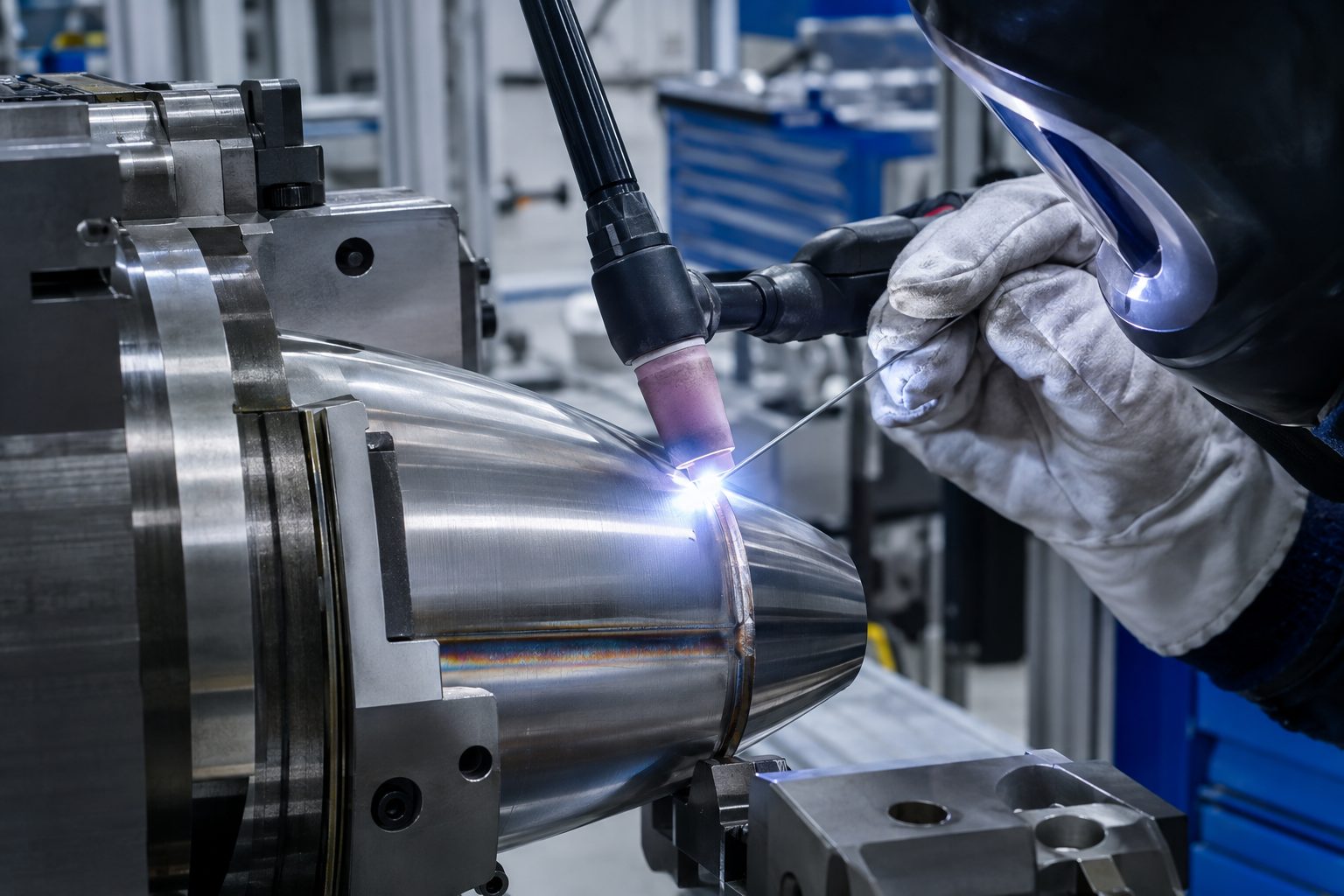
AWS D17.1/D17.1M, Specification for Fusion Welding for Aerospace Applications, sets weld acceptance by class. CCWI inspects aerospace fusion welds to the class called out on the drawing and reports the code, edition and acceptance criteria applied to every weld, so results can be signed off with confidence.
AWS D17.1 assigns each weld a class based on how critical it is. Class A welds carry the most stringent acceptance criteria, followed by Class B and Class C. The class on the drawing determines which discontinuities, sizes and spacings are acceptable and which inspections are required.
| Document | Use |
|---|---|
| AWS D17.1/D17.1M | Fusion welding for aerospace applications: classes and acceptance criteria |
| ASTM E1742/E1742M | Radiographic examination practice |
| ASTM E1417/E1417M | Liquid penetrant testing practice |
| ASTM E1444/E1444M | Magnetic particle testing practice |
| NAS 410 | Qualification and certification of NDT personnel |
Our free AWS D17.1 radiography presentation explains how each weld imperfection forms, how it looks on a radiograph and how to read the acceptance table.
AWS D17.1/D17.1M is the American Welding Society specification for fusion welding for aerospace applications. It covers welder and procedure qualification, workmanship, inspection and weld acceptance criteria by class.
They are weld classes assigned on the drawing according to how critical the weld is. Class A has the most stringent acceptance criteria, then Class B, then Class C.
AWS D17.1 radiography is performed in accordance with ASTM E1742, with acceptance based on the weld class.
CCWI personnel are qualified and certified to NAS 410 and ASNT SNT-TC-1A under a written practice, with ASNT NDT Level III oversight.